
The Invisible Guardian of the MP Rotator

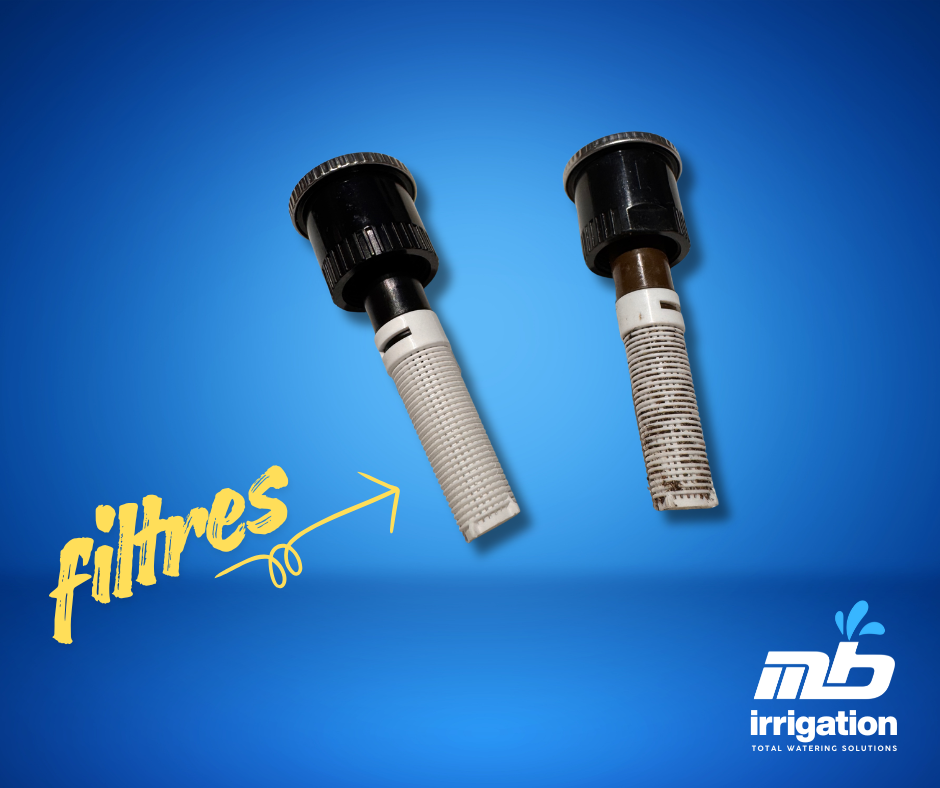
The Invisible Guardian of the MP Rotator
The Invisible Guardian of the MP Rotator
The Hunter MP Rotator is a masterpiece of small-scale engineering, using a miniature internal turbine to oscillate multiple streams of water. However, this precision comes with a vulnerability: the very channels that create those beautiful, wind-resistant streams are microscopic.
To protect the delicate internal gears from the grit and organic matter often found in reclaimed water or well systems, every nozzle is equipped with a high-efficiency mesh screen. This isn’t just a generic plastic filter; it is a precisely engineered barrier designed to match the specific flow requirements and orifice sizes of the MP1000, MP2000, and MP3000 series.
Mesh Density and Particle Exclusion
The primary metric for these filters is the mesh count. In irrigation, the mesh number refers to the number of openings per linear inch. A higher mesh number means a finer screen that catches smaller particles.
For most MP Rotator models, the standard is a white 40-mesh screen. This density is calculated to protect the specific orifice diameters of the nozzle. If a particle is small enough to pass through a 40-mesh screen, it is generally small enough to pass through the internal channels of the nozzle without causing a clog.
When we translate mesh size into physical dimensions, we use microns. A 40-mesh screen has an opening size of approximately 425 microns. To put that in perspective, a human hair is about 70 microns.
The relationship between the series and the filter requirements is summarized below:
| Series | Standard Filter Color | Mesh Rating | Micron Rating |
|---|---|---|---|
| MP1000 | White | 40 Mesh | 425 Microns |
| MP2000 | White | 40 Mesh | 425 Microns |
| MP3000 | White | 40 Mesh | 425 Microns |
| MP800 (SR) | Fine (Lime Green) | 60 Mesh | 250 Microns |
Protecting the Multi-Stream Path
The MP Rotator doesn’t just spray water; it uses ‘Multi-Stream Trajectory’ technology. This involves dividing the water into distinct, finger-like streams. Each stream has its own path through the nozzle head.
If the internal filter fails or is removed, particulates like sand or calcium deposits enter these paths. Because the water flow is divided, the pressure in each individual path is relatively low, making it difficult for the nozzle to ‘flush out’ debris on its own.