What water pressure should I use for my irrigation system?

What water pressure should I use for my irrigation system?
For most residential irrigation systems, a pressure of 2.5 to 4 bar is recommended. This can vary depending on the system type; for example, static sprinklers operate best at 1.8–2 bar, while rotary sprinklers require 2 to 4.5 bar. It’s crucial that the pressure doesn’t fall below 1.8–2.0 bar, as this can lead to uneven irrigation, and doesn’t exceed 4–5 bar without a pressure reducer to avoid damage to the system.
Optimal Pressure by System Type
- Static (pop-up) sprinklers: 1.8–2.0 bar.
- Rotor sprinklers: 2–4.5 bar.
- Drip irrigation: 1–3 bar.
What to do if the pressure isn’t adequate?
- Pressure too low: Consider installing a pressure booster pump to increase the pressure of water from a well or tank.
- Pressure too high: Install a pressure reducer at the outlet to lower the pressure to the optimal level. Mains water usually has sufficient pressure, which can be measured with a pressure gauge.
How to measure pressure?
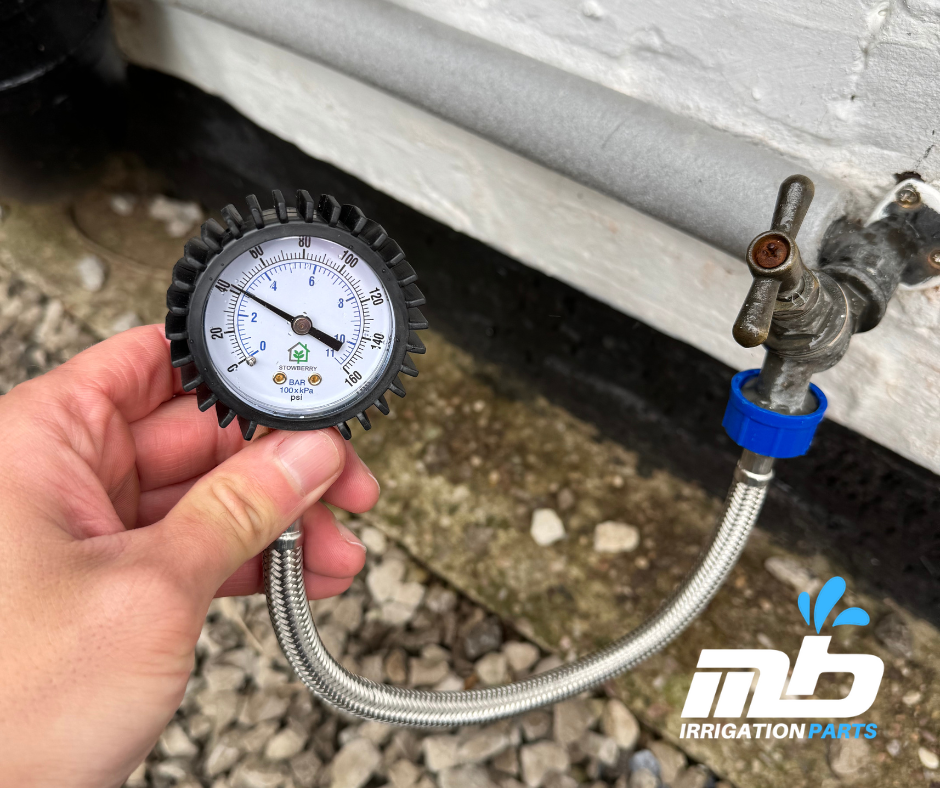
- Install a pressure gauge: Connect the pressure gauge to the water intake (e.g., an outdoor tap), preferably at the point closest to the source.
- Close other valves: Before taking the measurement, close all other valves on the property and in the house to obtain a reliable reading.
- Read the result: Open the tap fully and read the pressure from the pressure gauge.