7 Best MDPE Compression Fittings for Irrigation | MB Irrigation

7 Best MDPE Compression Fittings for Irrigation | MB Irrigation
When designing or upgrading an outdoor watering system in the UK, choosing the right pipework and connectors is the difference between a flawless setup and a costly, leaking lawn. If you have been looking for the most reliable way to connect your water lines, you have likely come across MDPE compression fittings.
At MB Irrigation, we know that navigating British plumbing standards and choosing the right parts can be challenging. In this comprehensive guide, we will break down everything you need to know about plastic compression fittings, how to choose the right sizes, and why they are the gold standard for poly pipe compression fittings in irrigation.
Why Use MDPE Compression Fittings for Irrigation?
MDPE (Medium-Density Polyethylene) is the industry-standard material for underground water mains and large-scale irrigation compression fittings in the UK.
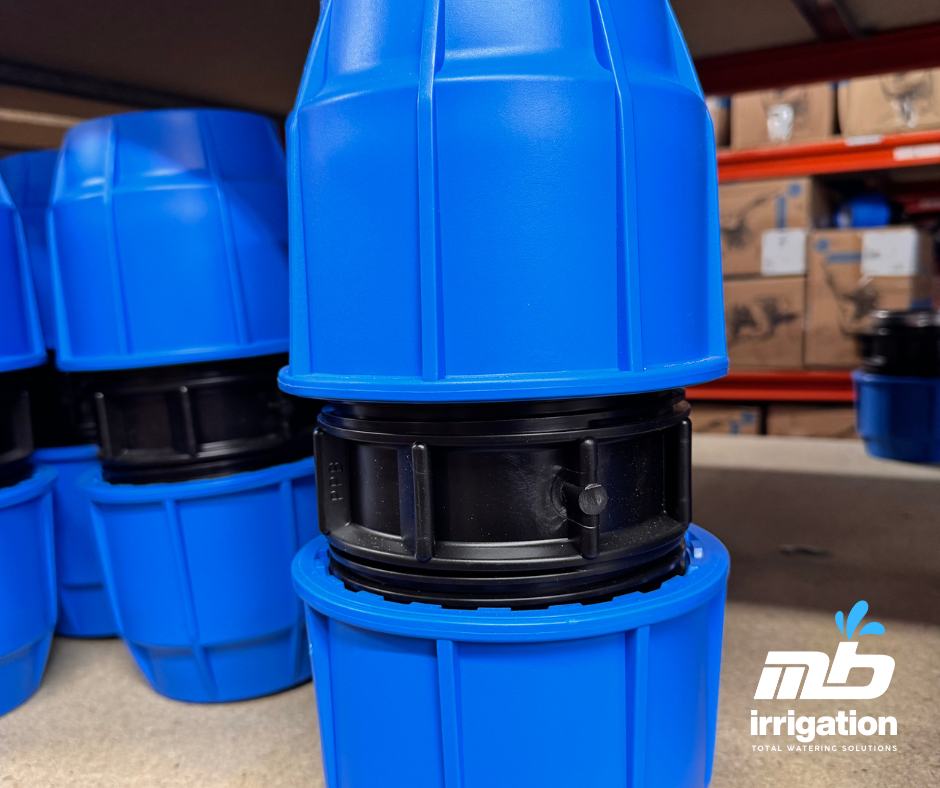
Unlike indoor copper plumbing, outdoor garden irrigation requires components that can withstand soil movement, frost, and high water pressure. Plastic compression fittings work by gripping the outside of the poly pipe using an internal split ring (collet) and an O-ring rubber seal. When you tighten the nut, it creates a watertight, mechanical joint without the need for heat, glue, or specialist soldering tools.
Understanding Sizes: Metric vs Imperial
One of the most common challenges for UK homeowners and trade installers is matching pipe sizes to thread sizes.
- Pipe Diameters (Metric): In the UK, standard residential and commercial irrigation systems primarily use 20mm, 25mm, and 32mm MDPE compression fittings.
- 20mm & 25mm MDPE lines are typically used for lateral lines feeding pop-up sprinklers and drip zones.
- 32mm MDPE is generally reserved for main supply lines coming from a high-flow pump or water meter.
- Thread Sizes (Imperial/BSP): Tap connections, manifold valves, and solenoid valves usually use British Standard Pipe (BSP) threads measured in inches (e.g., 1/2″, 3/4″, 1″).
When connecting your main pipe to an irrigation valve, you will need a transition fitting like a 25mm to 3/4 compression fitting.
Essential Types of Compression Fittings You Need
An efficient irrigation network requires various configurations to route water around your garden or commercial landscape. Here are the essential MDPE couplers and shapes you will need:
- Straight Coupling: Used to join two lengths of the same size pipe together in a straight line.
- Reducing Coupling (MDPE Reducer): Essential when transitioning from a larger main line (e.g., 32mm) down to a smaller zone pipe (e.g., 25mm) to maintain pressure.
- 90 Degree Elbow / Compression Elbow: Used to navigate sharp turns around patio borders, flowerbeds, or building foundations without kinking the pipe.
- Compression Tee: Allows you to split a single water line into two directions. You can opt for an equal tee (all three ends are the same size) or a reducing tee.
- MDPE Male & Female Adaptors: These feature a compression connection on one end and a threaded screw (male or female) on the other, allowing you to connect directly to backflow preventers or manifold boxes.
- End Cap / Blanking Plug: Used to securely seal off the end of a pipe run.
- Compression Ball Valve / Stop Tap: Allows you to isolate specific watering zones for winterisation or maintenance without shutting off the main water supply.
WRAS Approved vs Above Ground MDPE Fittings: What is the Difference?
If you are sourcing parts in the UK, you might notice labels mentioning WRAS approved compression fittings. WRAS (Water Regulations Advisory Scheme) approval means the fitting has been thoroughly tested and is certified safe for drinking (potable) water.
- Do you need WRAS approval for irrigation? If your irrigation system connects directly to the mains water supply via a non-return valve, using WRAS-approved brands like Plasson compression fittings or Philmac fittings ensures you comply with local UK water regulations.
- Above Ground vs Below Ground: Standard blue MDPE pipe is meant to be buried underground to protect it from UV degradation. If you are running lines on the surface (e.g., along a fence line for hanging baskets), make sure to use black poly pipe and UV-stabilised above ground MDPE fittings.
Step-by-Step: How to Install a Poly Pipe Compression Fitting
Achieving a leak-free joint is easy if you follow the correct sequence.
- Cut Cleanly: Cut the MDPE pipe square using a proper pipe cutter. A jagged or angled cut will damage the O-ring.
- Chamfer the Edge: Use a chamfering tool to bevel the sharp outer edge of the pipe. This prevents the pipe from cutting or displacing the rubber O-ring inside the fitting.
- Slacken the Nut: You do not need to take the fitting completely apart. Just slacken the nut by a few turns.
- Push Past the Seal: Push the pipe firmly into the fitting. You will feel an initial resistance—keep pushing until the pipe passes through the rubber O-ring and hits the internal pipe stop.
- Tighten Securely: Hand-tighten the nut first. For sizes 25mm and above, use a specialist MDPE bevel tool or compression wrench to give it a final quarter or half turn. Do not overtighten, as this can crack the plastic nut.
Looking for Trade-Quality Irrigation Parts in the UK?
While it might be tempting to grab generic Screwfix compression fittings or browse the aisles at Toolstation for MDPE parts, standard plumbing fittings aren’t always optimised for the specific pressures and flow rates of commercial or complex garden irrigation systems.
At MB Irrigation, we stock premium, heavy-duty irrigation compression fittings engineered specifically to withstand the demands of professional watering systems. Whether you are looking for dependable Plasson components or need advice on staging your garden zones, our team is here to help.
Explore our full range of MDPE compression fittings today or contact our team for bespoke irrigation design advice.