
Harnessing Early Spring Pruning for Bushy Growth

Harnessing Early Spring Pruning for Bushy Growth
Plant Physiology
The Plant’s Command Center
Plants might not have brains, but they have a sophisticated communication system that tells them when and where to grow. This system runs on chemical messengers called hormones. Just like in our bodies, these hormones travel around the plant, delivering instructions to different parts.
Two of the most important hormones for growth are auxin and cytokinin. Think of them as a duo with very different jobs. One promotes vertical growth, while the other encourages branching out.
Auxin
A plant hormone that plays a key role in cell elongation, phototropism (growing toward light), and maintaining apical dominance.
Cytokinin
A class of plant hormones that promote cell division, or cytokinesis, in plant roots and shoots. They are involved in cell growth and differentiation.
The Reign of the Apical Bud
Most plants have a natural tendency to grow taller rather than wider. This is called apical dominance. The topmost bud of the main stem, the apical bud, is king. It grows upward while preventing the side buds, called lateral buds, from sprouting. This is a survival strategy, helping the plant reach for sunlight as quickly as possible.
This dominance is enforced by auxin. The apical bud is a little auxin factory, constantly sending the hormone down the stem. This downward flow acts like a “stop” signal for the lateral buds below it. Meanwhile, cytokinins are produced in the roots and travel up the stem, sending a “grow” signal to those same lateral buds. But as long as the apical bud is intact, the auxin signal is stronger, and the lateral buds remain dormant.
This hormonal balance is what keeps the plant growing tall and skinny. But what happens if we remove the king?
Pruning Changes the Game
When we prune a plant, we often snip off that top apical bud. This act of cutting does more than just shorten the stem; it completely disrupts the hormonal chain of command.
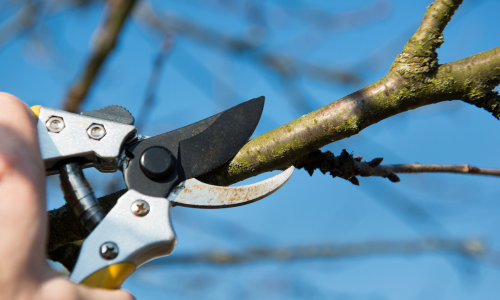
Suddenly, the upward-flowing cytokinins have no opposition. Their “grow” signal reaches the dormant lateral buds, and they awaken. These buds then sprout and grow into new stems. The result is a plant that is no longer focused on upward growth but instead becomes bushier and fuller.
This is why pruning is such a powerful tool for shaping plants. You’re not just cutting branches; you’re redirecting the plant’s energy and growth patterns by manipulating its natural hormonal balance.
The best time to perform this kind of pruning is in late winter or early spring. The plant is dormant, so the cut is less of a shock. More importantly, it’s about to enter its major growth phase. By pruning just before this spring rush, you ensure the newly activated lateral buds have all the energy they need to grow vigorously.