Glossary of Terms – Irrigation System

-
What is static and dynamic hydrostatic pressure?
Pressure is a quantity defining how much force is concentrated on a surface. Pressure is measured in kPa, bar or atmosphere, and measurements are made using a manometer.
Hydrostatic pressure is the pressure of a water column that acts on surfaces through gravity. Regardless of the surface, the pressure of a 10-meter column of water is 1 bar and is a scalar value.
Static pressure is a value measured in a closed system without water flow.
Dynamic pressure is a value measured when the system is open and/or when water is flowing.
-
What is a nozzle?
The nozzle is an element that defines the size of the drop. The size of the droplets depends on the shape of the stream and changes depending on the construction of the selected nozzle. Higher efficiency nozzles emit larger drops, lower efficiency nozzles spray smaller drops. Larger drops are also sprayed if the pressure is low, while at too high pressure the drops are small and even mist is produced. In most cases, nozzles are replaceable in irrigation devices. These are the elements that determine the angle of spraying the stream. Nozzles mounted in the static body create a static sprinkler.
-
What is a solenoid valve?
A solenoid valve is a valve used to control water flow. The valve’s control element is an electromagnetic coil (also known as an air coil or solenoid). In solenoid valves, the opening or closing of the valve is determined by a change in the electrical signal controlling the valve, which generates a force that sets the core in motion. Solenoid valves are divided into 24V AC, which work with 230V AC controllers, and 9V DC, which work with 9V DC battery controllers.
-
What is a filter?
A filter is an element designed to retain certain groups of substances and contaminants. A device used to separate solid substances suspended in water. Filters are divided into mesh filters, disc filters and sand filters. Each type of filter is designed to capture a different type of contaminant and has a different area of application. Filters differ in their construction and elements separating solid particles.
-
What is a collector?
The collector is the place where the installation is divided into valve sections. It usually consists of collector fittings, i.e. fittings with screw connections allowing easy disassembly of the collector elements, manual valves and/or solenoid valves, filter, pressure regulator, compressor outlet. It is recommended to plan the collector outside in a collector box or in the case of field irrigation installations on specially designed frames that facilitate service and maintenance of the system.
-
What is drip irrigation?
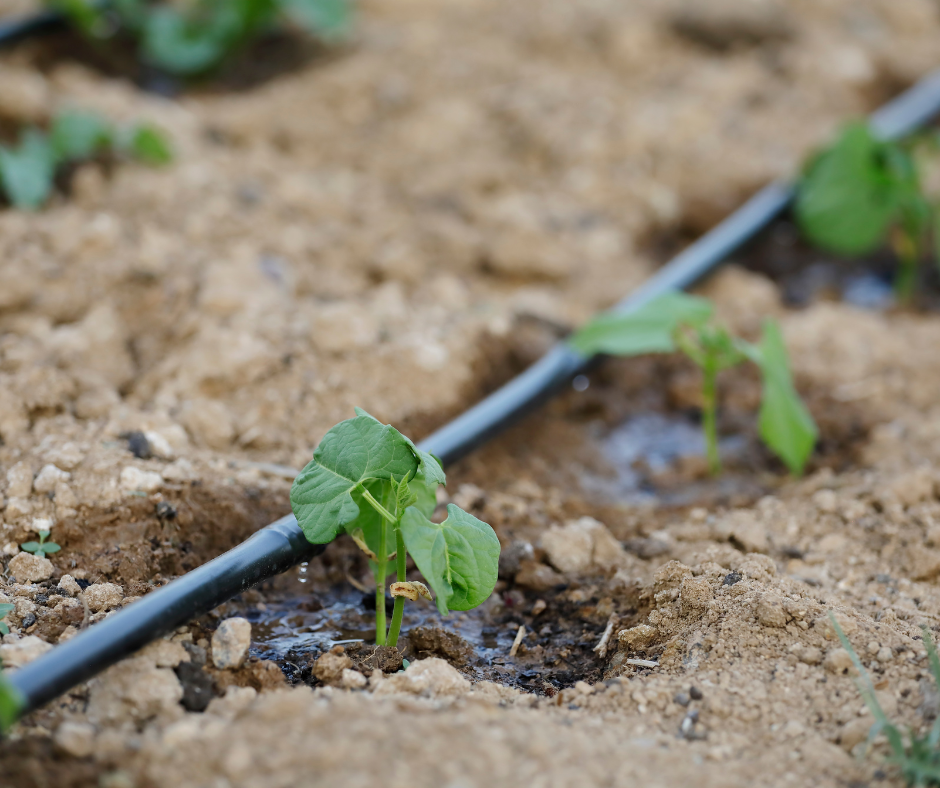
Irrigation using low-pressure drip line or drip emitters. This method of irrigation is used in agriculture and in private gardens, including for watering hedges, trees or flower beds.
-
What is a section?
The section includes all devices that are to operate simultaneously after the valve or solenoid valve is opened. The installation should be divided into sections if the sum of the device capacities exceeds the maximum capacity of the water source and when devices with different frequencies and lengths of watering time operate within one installation, e.g. static sprinklers and drip line, static sprinklers and rotary sprinklers, etc. It is recommended to divide the area covered by irrigation into sectors depending on the type of soil or sunlight conditions, e.g. sprinkler section from the south, sprinkler section from the north, etc. The number of sections depends on the operating pressure of the devices and the maximum capacity of the source.
-
What is an irrigation controller?
The irrigation controller controls the operation of the automatic irrigation system by opening and closing solenoid valves according to the plan set by the system user. The system user decides on the start times, duration and frequency of watering by setting the irrigation plan. The controllers are divided into controllers for internal and external installation (on the facade), 230V AC controllers and battery 9V DC controllers.
-
What are pressure losses?
Pressure losses are the difference between the hydrostatic outlet pressure and the final pressure in the installation. Pressure losses result from friction resistance inside the pipeline and vary depending on the roughness of the internal walls of the pipe, its diameter, number of outlets, number of connectors, etc. Pressure losses should be taken into account when dividing devices into valve sections and always refer them to data on the working pressure of the devices in the design process.
-
What is efficiency?
Efficiency, or flow, is the movement of water per unit of time. A greater efficiency of a source means the transport of a greater volume of water in a given time. Flow is given in l/s; l/h or m3/h.
-
What is the connector for?
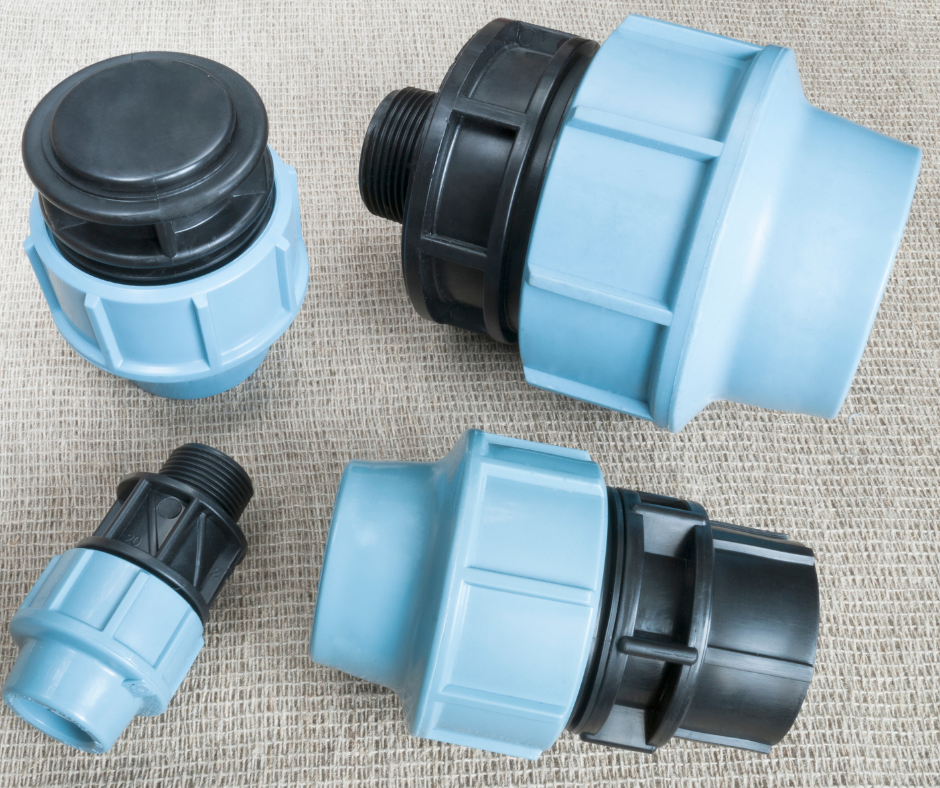
Couplings are used to create connections and branches of pipelines. Couplings are divided into collector couplings, screwed PE couplings, push-in couplings with QJ stabilization, push-in couplings, aluminum hydrant couplings and quick couplings.
-
What is a pop-up sprinkler?
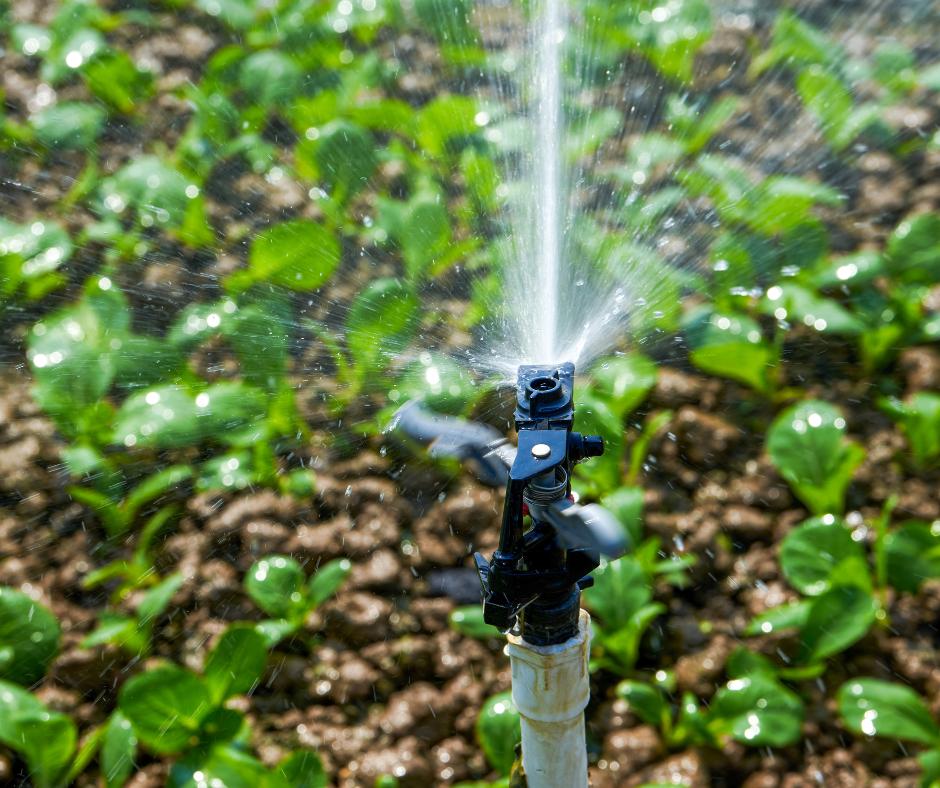
Sprinklers are irrigation devices used for spraying lawns or flower beds. Sprinklers are divided into static and rotary. A static sprinkler consists of a body and a selected nozzle, while a rotary sprinkler (rotor) is a device with a rotating shaft and a set of interchangeable nozzles dedicated to a given model. The sprinkler is mounted in the ground. The movable part of the device extends under the influence of water pressure. The shaft of a static sprinkler does not rotate, unlike a rotary sprinkler.