How to Choose Between MDPE and LDPE Pipes for Your Garden Irrigation

When you sit down to map out a professional garden irrigation system, the sheer volume of piping options can look a bit daunting. You will constantly see two acronyms popping up: MDPE and LDPE. Getting the choice between these two wrong is one of the most common mistakes DIY installers and general landscapers make across the UK, often leading to restricted water flow, burst joints, or complete system failure under heavy mains pressure.
At MB Irrigation, we live and breathe pipework layout design. In this straightforward guide, we will break down the technical differences between MDPE and LDPE water pipes, explain exactly where each type belongs in your grid, and help you choose the correct sizing for your North West property.
What is MDPE Pipe and Where Does it Belong?
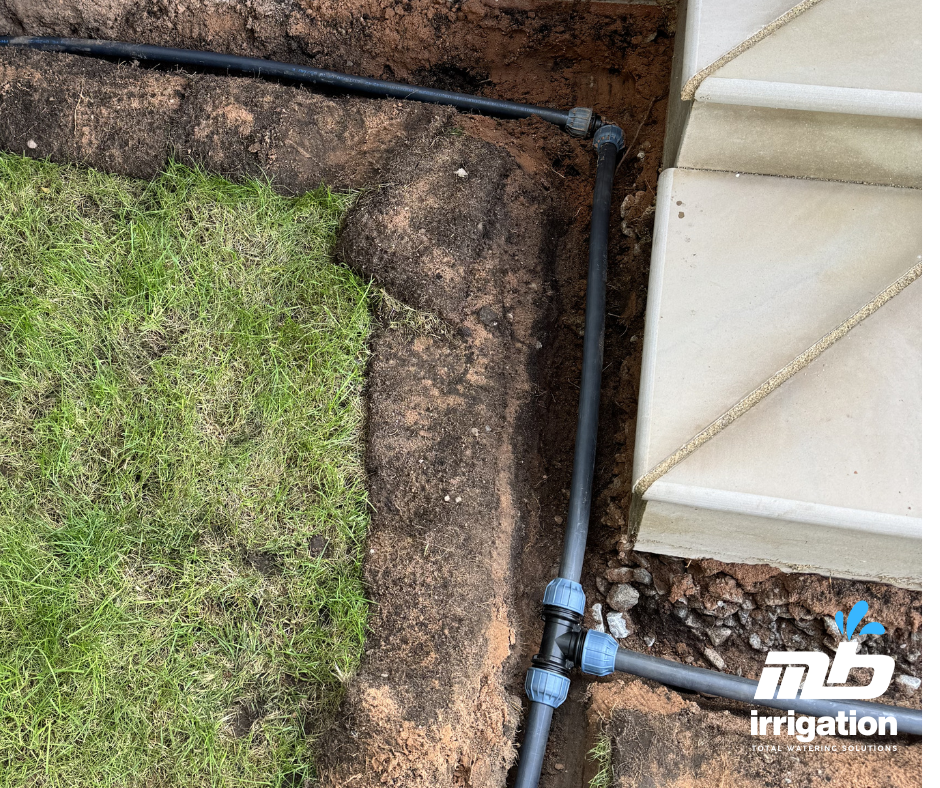
MDPE stands for Medium-Density Polyethylene. If you have ever seen a thick, rigid blue or black pipe being laid in a deep trench, that is MDPE. It is an incredibly robust, heavy-duty commercial pipe engineered to handle high constant pressures—typically up to 12 bar or more depending on the rating.
Because it is so rigid and virtually indestructible, MDPE must always be used for your primary supply mainline. This is the run of pipe that connects directly to your outdoor garden tap, water meter, or borehole pump, and carries the high-pressure water directly to your underground valve boxes. It is designed to be buried deep below the frost line (usually around 350mm to 500mm deep in the UK) to survive shifting soils and cold British winters.
- Blue MDPE: Legally required in the UK if you are piping potable (drinking) mains water before any backflow preventer.
- Black MDPE: The trade standard for non-potable irrigation systems, garden feeds, well pumping, and any above-ground exposed mainline runs, as the black pigment offers superior UV protection.
What is LDPE Pipe and Where Does it Belong?
LDPE stands for Low-Density Polyethylene. This pipe is completely different to its heavier cousin. It is soft, highly pliable, and usually comes in a sleek black finish. If you hold a piece of LDPE, you can easily squeeze it with your fingers and bend it around a garden border without it kinking.
Because it is softer, LDPE has a much lower pressure rating (typically around 3 to 4 bar maximum). Therefore, LDPE should only be used after your solenoid valves, inside the individual watering zones (laterals). It is the perfect hose for running along hedge lines, weaving through flowerbeds, or feeding raised vegetable plots. Its soft walls are specifically engineered so you can use a pocket punch tool to snap in micro drippers, emitters, or take-off leads without splitting the pipe.
MDPE vs LDPE Water Pipe UK: Sizing Chart for Success
Another massive hurdle for installers is selecting the right pipe diameter. In irrigation, pipe sizing directly dictates your water volume and friction loss (how much pressure you lose the further the water travels). Here is how the trade maps out a domestic grid:
| Pipe Type & Size | Best Used For | Matching Hardware Link |
|---|---|---|
| 20mm MDPE / LDPE | Small gardens, short pipe runs, or single narrow micro-irrigation zones. | Secondary lateral zones. |
| 25mm MDPE / LDPE | The absolute gold standard for standard domestic lawn sprinklers and hedge drip lines. | Standard residential feeds. |
| 32mm MDPE | High-volume mainlines, long properties, pump feeds, and multi-zone systems. | Primary supply feeds. |
A Quick Trade Tip: If your garden tap has brilliant flow, running a primary 32mm or 25mm mainline ensures you don’t starve your sprinklers of water. Stepping down from a larger mainline to smaller lateral lines is great, but you can never fix a weak water supply by doing the reverse.
Bringing the Grid Together
To summarize the perfect layout: Run your water from the main tap through high-pressure black or blue MDPE pipe down into the ground. Connect this to your valve box using heavy-duty plastic compression fittings. Once the water passes through your automated solenoid valves into the individual garden zones, transition over to flexible LDPE pipe or porous drip lines to feed your plants gently at root level.
Whether you are plumbing a bespoke multi-zone lawn pop-up system or establishing a simple allotment vegetable plot in Cheshire, using the right pipe in the right place saves hours of troubleshooting down the line. If you are stuck calculating your flow rates or need advice on pipe sizing near Warrington, feel free to contact the team at MB Irrigation or browse our trade-approved plumbing stock today.